
Product Description
Product Description
This gearbox is designed for plastic extrusion machine. It meet JB/T9040-1999 standard. The gear is made of high-strength alloy steel and hardened by carburizing and quenching. The accuracy of grinding teeth is higher than Level 6 and the hardness is HRC 54-62. In the front of output shaft,we assemble a thrust bearing with high safety factor to bear the extrusion pressure of screw.
Detailed Photos
| Loading capacity sheet of CHINAMFG and ZSYJ reduction gearboxes | ||||||||||||||||||||
| Type | ZLYJ | ZSYJ | ||||||||||||||||||
| Spec | △ | △ | △ | △ | △ | △ | * | * | * | * | * | * | * | * | * | * | * | * | ||
| 112 | 133 | 146 | 173 | 200 | 225 | 250 | 280 | 315 | 330 | 375 | 395 | 420 | 450 | 500 | 560 | 630 | 450 | 560 | 530 | |
| -8 | -8 | -10 | -12.5 | -12.5 | -16 | -16 | -16 | -16 | -16 | -16 | -16 | -16 | -12 | -20 | -20 | -20 | -32 | -57 | -44 | |
| Normal input power(kw) n=1500rpm | ||||||||||||||||||||
| Ordinary reliable | 15 | 22 | 30.8 | 39 | 55 | 75 | 82.5 | 116 | 171 | _ | 260 | 300 | 315 | 332 | 450 | 600 | 825 | 240 | 240 | 370 |
| High reliable | 10 | 15 | 18.3 | 30.8 | 45 | 60 | 67 | 75 | 116 | 207 | 207 | 240 | 250 | 266 | 350 | 550 | 675 | 200 | 220 | 315 |
| Allowable output torque(N.m) | ||||||||||||||||||||
| Ordinary reliable | 800 | 1165 | 1962 | 2484 | 4379 | 6568 | 7643 | 11822 | 17427 | _ | 26497 | 3571 | 32102 | 38599 | 5571 | 76433 | 105095 | 48917 | 87134 | 103694 |
| High reliable | 525 | 764 | 1165 | 1962 | 3583 | 5334 | 6306 | 7643 | 11822 | 21000 | 21096 | 24380 | 25478 | 33885 | 44566 | 70063 | 85978 | 40764 | 79873 | 88280 |
| Recommended parameters of single-screw extruder machine reduction gearbox(Optional) | ||||||||
| Type | Spec. | Power/Kw | Speed-Input | Speed-Output | Load torque/N.m | Axial force/KN | Screw diameter | Length-Diameter Ratio |
| ZLYJ | 112-8 | 5.5 | 800 | 100 | 525 | 35 | less than 35 | 25:1 |
| 113-8 | 6 | 800 | 100 | 764 | 39 | 50 | 25:1 | |
| 146-10 | 11 | 1000 | 100 | 1050 | 54 | 55 | 25:1 | |
| 173-10 | 18.5 | 900 | 90 | 1962 | 110 | 65 | 25:1 | |
| 200-12.5 | 30 | 1000 | 80 | 3581 | 155 | 75 | 25:1 | |
| 225-12.5 | 45 | 1000 | 80 | 5371 | 180 | 90 | 25:1 | |
| 250-16 | 55 | 1120 | 70 | 7503 | 192 | 105 | 25:1 | |
| 280-16 | 75 | 960 | 60 | 7643 | 258 | 110 | 25:1 | |
| 315-16 | 85 | 960 | 60 | 13528 | 287 | 120 | 25:1 | |
| 330-16 | 110 | 960 | 60 | 17528 | 360 | 135 | 25:1 | |
| 375-16 | 132 | 960 | 60 | 21008 | 390 | 150 | 25:1 | |
| 395-16 | 185 | 960 | 60 | 29442 | 400 | 160 | 25:1 | |
| 420-16 | 160/220 | 960 | 60 | 31831 | 430 | 160/170 | ||
| 450-20 | 213 | 1000 | 60 | 40640 | 500 | 180 | 25:1 | |
| 500-20 | 220 | 1000 | 50 | 42571 | 550 | 180 | 25:1 | |
| 560-17 | 440 | 1000 | 50 | 84034 | 700 | 200 | 25:1 | |
| 630-10 | 540 | 1000 | 50 | 15712 | 770 | 250 | 25:1 | |
| ZSYJ | 450-32 | 200 | 1500 | 47 | 4 0571 | 500 | 165 | 25:1 |
| 560-57 | 220 | 1500 | 26 | 80802 | 700 | 190 | 25:1 | |
Company Profile
Zhe jiang yifan gear box group CO., LTD was set up in 1970. It specializes in developing and producing small and medium-sized marine gearboxes, plastic extruder slowdown bins, Z4 DC motors,generators and so on.There are mainly 300 moreproduction equipments,including more than60 big,fine and expensive ones. The area of our company is 110, 000 square meters.There are 350 staff,and 25%of the total number are the middle and senior technical members. Since the venture,we commit toresearching and developing new products,and keeping improving the technology. We pay great attention to the after-salesservice. All of these efforts increase the developing footsteps of our company. We have strong technical strength , sophisticatedprocessing equipments,advanced products detection equipments,and own a complete security system including productsdesigned,mechanical processing,unit assembly,testing before coming out from the factory and after-sales service. Ourproducts have passed the ISO9001 Quality System Certification.
Certifications
Our Advantages
1: High transmission efficiency
2: Smooth operation and low noise
3: Small size and high carrying capacity.
4: Easy to disassemble and easy to install.
FAQ
Q: Are you trading company or manufacturer?
A: We are factory.
Q: How long is your delivery time?
A: Generally it is 5-10 days if the goods are in stock. or it is 15-20 days if the goods are not in stock.
Q: Can we buy 1 pc of each item for quality testing?
A: Yes, we are glad to accept trial order for quality testing.
| Application: | Machinery |
|---|---|
| Function: | Speed Reduction |
| Layout: | Coaxial |
| Hardness: | Hardened Tooth Surface |
| Installation: | Horizontal Type |
| Step: | Double-Step |
| Samples: |
US$ 500/Piece
1 Piece(Min.Order) | |
|---|
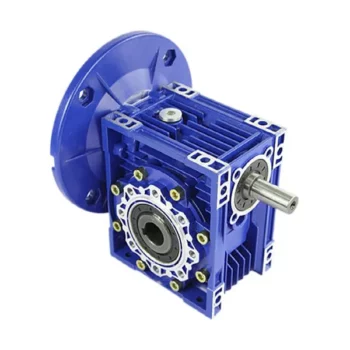
Calculating Gear Ratio in a Worm Reducer
The gear ratio in a worm reducer is determined by the number of teeth on the worm wheel (also known as the worm gear) and the number of threads on the worm shaft. The gear ratio formula for a worm reducer is:
Gear Ratio = Number of Teeth on Worm Wheel / Number of Threads on Worm Shaft
For example, if the worm wheel has 60 teeth and the worm shaft has a single thread, the gear ratio would be 60:1.
It’s important to note that worm reducers have an inherent self-locking property due to the angle of the worm threads. As a result, the gear ratio also affects the mechanical advantage and the system’s ability to resist backdriving.
When calculating the gear ratio, ensure that the worm reducer is properly designed and that the gear ratio aligns with the desired mechanical characteristics for your application. Additionally, consider factors such as efficiency, load capacity, and speed limitations when selecting a gear ratio for a worm reducer.
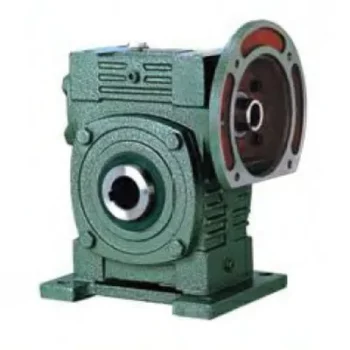
How to Calculate the Efficiency of a Worm Gearbox
Calculating the efficiency of a worm gearbox involves determining the ratio of output power to input power. Efficiency is a measure of how well the gearbox converts input power into useful output power without losses. Here’s how to calculate it:
- Step 1: Measure Input Power: Measure the input power (Pin) using a power meter or other suitable measuring equipment.
- Step 2: Measure Output Power: Measure the output power (Pout) that the gearbox is delivering to the load.
- Step 3: Calculate Efficiency: Calculate the efficiency (η) using the formula: Efficiency (η) = (Output Power / Input Power) * 100%
For example, if the input power is 1000 watts and the output power is 850 watts, the efficiency would be (850 / 1000) * 100% = 85%.
It’s important to note that efficiencies can vary based on factors such as gear design, lubrication, wear, and load conditions. The calculated efficiency provides insight into how effectively the gearbox is converting power, but it’s always a good practice to refer to manufacturer specifications for gearbox efficiency ratings.
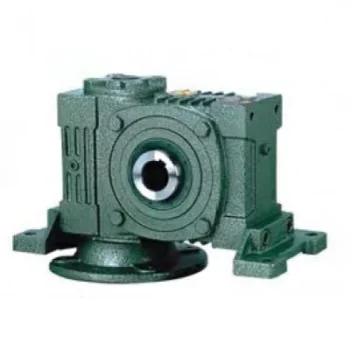
How Does a Worm Gearbox Compare to Other Types of Gearboxes?
Worm gearboxes offer unique advantages and characteristics that set them apart from other types of gearboxes. Here’s a comparison between worm gearboxes and some other common types:
- Helical Gearbox: Worm gearboxes have higher torque multiplication, making them suitable for heavy-load applications, while helical gearboxes are more efficient and offer smoother operation.
- Bevel Gearbox: Worm gearboxes are compact and can transmit motion at right angles, similar to bevel gearboxes, but worm gearboxes have self-locking capabilities.
- Planetary Gearbox: Worm gearboxes provide high torque output and are cost-effective for applications with high reduction ratios, whereas planetary gearboxes offer higher efficiency and can handle higher input speeds.
- Spur Gearbox: Worm gearboxes have better shock load resistance due to their sliding motion, while spur gearboxes are more efficient and suitable for lower torque applications.
- Cycloidal Gearbox: Cycloidal gearboxes have high shock load capacity and compact design, but worm gearboxes are more cost-effective and can handle higher reduction ratios.
While worm gearboxes have advantages such as high torque output, compact design, and self-locking capability, the choice between gearbox types depends on the specific requirements of the application, including torque, efficiency, speed, and space limitations.


editor by CX 2023-09-23