
Product Description
UMC is the industry leader in gearbox technology. Over our 40 year history we have introduced many industry changing gearboxes such as the patented TNT gearbox, the 740, the 760, the 775 and more. We continue to define and redefine industry standards for gearbox performance, quality, features and technology. Our gearboxes are purpose built to do the job. Never over-engineered.
UMC stands behind its products and is committed to manufacturing the best products for a global market.
10141-103KU, 740U MASTER WITH SPLINED HYDRAULIC INPUT
Features and Benefits
-
Hydraulic input for direct motor coupling
-
2.25″ diameter steel output shaft
-
50:1 gear ratio
-
Cartridge input and output seals
-
Large input bearings
-
Full cycle external expansion chamber with stainless steel cover
-
11-Bolt mounting pattern
-
External seal protectors for input and output seals
-
Top oil fill plug
-
Filled with extreme pressure gear oil
-
Positive wheel register
10141-105KU, 740U SLAVE
Features and Benefits
-
2.25″ diameter steel output shaft
-
50:1 gear ratio
-
Cartridge input and output seals
-
Large input bearings
-
Full cycle external expansion chamber with stainless steel cover
-
11-Bolt mounting pattern
-
External seal protectors for input and output seals
-
Top oil fill plug
-
Filled with extreme pressure gear oil
-
Dual ended input shaft with a hub cap for the unused end
-
Positive wheel register
TNT-2 Gearbox
Designed for applications where the irrigation system may need to be towed
This gearbox is the perfect solution for a towable irrigation system. Growers typically prefer this gearbox over a gearbox with a towable hub. Simply disengage the worm and tow your system to its working location, then re-engage the worm and you are ready to run. The CX coupler is the perfect compliment for the TNT-2 gearbox due to the ability to control coupler disengagement at the gearbox.
The UMC patented TNT-2 final drive gearbox is designed specifically for applications where a center CHINAMFG or lateral move/ linear irrigation system needs to be towed. The gearbox provides the ability to disengage the worm gear and allows users to move systems from 1 area to another without requiring a Towable Hub add on.
Features and Benefits
- 2.25″ output shaft
- 50:1 gear ratio
- Dual input seals with triple lip output seals
- Bronze gear optional
- Input shaft guard
- External seal protectors for input and output seals
- Top oil fill plug
- 11-Bolt mounting pattern
- Full cycle expansion chamber with stainless steel cover
- Filled with extreme pressure worm gear oil
- Steel output shaft and input shaft
- Tapered roller bearings
- Includes carriage bolts and nuts
- Dual ended input shaft
UMC PLANETARY WHEEL DRIVE GEARBOX, 68:1,Features and Benefits:
1) Planetary gearboxes can replace TL
2) Hydraulic input for direct motor coupling
3) Quick acting is standard for more versatility
4) 24:1 or 68:1 gear ratio
5) 9-bolt wheel flange pattern
6) CHINAMFG output torque of 66,200 in-lbs
7) Filled with lithium grease
UMC is the industry leader in gearbox technology. Over 37 year history they have introduced many industry changing gearboxes such as the patented TNT gearbox, the 740, the 760, the 775 and more. CHINAMFG continue to define and redefine industry standards for gearbox performance, quality, features and technology. CHINAMFG gearboxes are purpose built to do the job. Never over-engineered.UMC stands behind its products and is committed to manufacturing the best products for a global market.
/* January 22, 2571 19:08:37 */!function(){function s(e,r){var a,o={};try{e&&e.split(“,”).forEach(function(e,t){e&&(a=e.match(/(.*?):(.*)$/))&&1
| Application: | Motor, Agricultural Machinery, Agricultural |
|---|---|
| Function: | Speed Reduction |
| Hardness: | Hardened |
| Type: | Worm and Wormwheel |
| Material: | Cast Iron |
| Manipulate Way: | Semi-Automatic Manipulation |
| Customization: |
Available
| Customized Request |
|---|
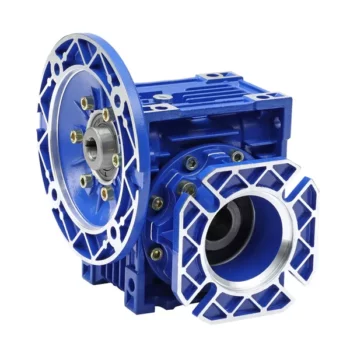
Self-Locking Properties in a Worm Gearbox
Yes, worm gearboxes exhibit self-locking properties, which can be advantageous in certain applications. Self-locking refers to the ability of a mechanism to prevent the transmission of motion from the output shaft back to the input shaft when the system is at rest. Worm gearboxes inherently possess self-locking properties due to the unique design of the worm gear and worm wheel.
The self-locking behavior arises from the angle of the helix on the worm shaft. In a properly designed worm gearbox, the helix angle of the worm is such that it creates a mechanical advantage that resists reverse motion. When the gearbox is not actively driven, the friction between the worm threads and the worm wheel teeth creates a locking effect.
This self-locking feature makes worm gearboxes particularly useful in applications where holding a load in position without external power is necessary. For instance, they are commonly used in situations where there’s a need to prevent a mechanism from backdriving, such as in conveyor systems, hoists, and jacks.
However, it’s important to note that while self-locking properties can be beneficial, they also introduce some challenges. The high friction between the worm gear and worm wheel during self-locking can lead to higher wear and heat generation. Additionally, the self-locking effect can reduce the efficiency of the gearbox when it’s actively transmitting motion.
When considering the use of a worm gearbox for a specific application, it’s crucial to carefully analyze the balance between self-locking capabilities and other performance factors to ensure optimal operation.
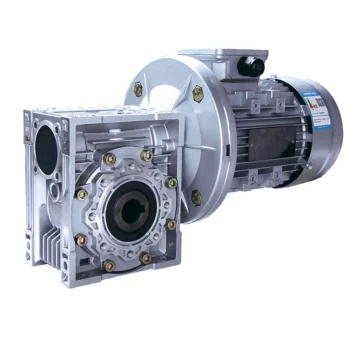
Does a Worm Reducer Require Frequent Maintenance?
Worm reducers generally require less frequent maintenance compared to some other types of gearboxes due to their design and operating characteristics. However, maintenance is still essential to ensure optimal performance and longevity. Here are some key points to consider:
- Lubrication: Proper lubrication is crucial for worm gearboxes. Regularly check the lubricant level and quality to prevent wear and overheating. Lubricant should be changed as recommended by the manufacturer.
- Inspections: Periodically inspect the gearbox for signs of wear, damage, or oil leaks. Check for any unusual noises, vibrations, or changes in performance that could indicate a problem.
- Tightening and Alignment: Check and tighten any loose fasteners and ensure that the gearbox is properly aligned. Misalignment can lead to increased wear and reduced efficiency.
- Seal Maintenance: Inspect and maintain seals to prevent oil leakage and contaminants from entering the gearbox.
- Cleaning: Keep the gearbox clean from debris and contaminants that could affect its performance. Regular cleaning can prevent premature wear and damage.
- Load and Speed: Ensure that the gearbox is operating within its rated load and speed limits. Exceeding these limits can lead to accelerated wear and potential failure.
- Environmental Conditions: Consider the operating environment of the gearbox. Extreme temperatures, humidity, and other factors can impact the gearbox’s performance and longevity.
While worm gearboxes are known for their durability and self-locking feature, neglecting maintenance can lead to premature wear, reduced efficiency, and potential breakdowns. Following the manufacturer’s recommendations for maintenance intervals and procedures is essential to keep the worm reducer in optimal condition.
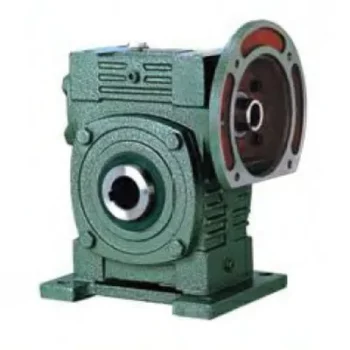
Types of Worm Gear Configurations and Their Uses
Worm gear configurations vary based on the arrangement of the worm and the gear it engages with. Here are common types and their applications:
- Single Enveloping Worm Gear: This configuration offers high torque transmission and efficiency. It’s used in heavy-duty applications like mining equipment and industrial machinery.
- Double Enveloping Worm Gear: With increased contact area, this type provides higher load capacity and improved efficiency. It’s used in aerospace applications, robotics, and precision machinery.
- Non-Throated Worm Gear: This type has a cylindrical worm without a throat. It’s suitable for applications requiring precise motion control, such as CNC machines and robotics.
- Throated Worm Gear: Featuring a throat in the worm, this configuration offers smooth engagement and higher load capacity. It’s used in conveyors, elevators, and automotive applications.
- Non-Modular Worm Gear: In this design, the worm and gear are a matched set, resulting in better meshing and efficiency. It’s utilized in various industries where customization is essential.
- Modular Worm Gear: This type allows interchangeability of worm and gear components, providing flexibility in design and maintenance. It’s commonly used in conveyors, mixers, and material handling systems.
Selecting the appropriate worm gear configuration depends on factors such as load capacity, efficiency, precision, and application requirements. Consulting gearbox experts can help determine the best configuration for your specific needs.


editor by CX 2024-04-22