
Product Description
Detailed Images
Fixedstar supplied worm gear reducers in inch dimensions FCQY.
Ratio: 5:1~60:1(Single)/80:1~3600:1(2 Stage);
Input Power: 0.12~15KW;
Max. Output Torque: 4320N.m(Single);
Input Style: Compact with motor, shaft input, motor adaptor (IEC/NEMA);
Output Style: Hollow shaft output, CHINAMFG shaft output;
Installation Position: Versatile MP.
Dimensions of FCQY Inch Size Worm Gear Box Speed Reducer
Packing & Delivery
Packaging Pictures of Worm Gear Reduce and Helical Geared Motor
Inner Packing: PP bag with carton;
Outer Packing: Carton boxes and wooden cases;
Leadtime: 20-30 days CHINAMFG order confirm.
About Us
Welcome to CHINAMFG Group, China’s leading gearbox manufacturer since 1976. Our journey, spHangZhou over 4 decades, has established us as a benchmark of CHINAMFG in the power transmission industry.
We proudly made history in the 1980s by exporting the first China-made reducer and have since maintained our status as China’s top gearbox exporter.Today, we proudly export 70% of our products to more than 40 countries, including key markets like Italy, Germany, the USA, Spain, Brazil, Argentina, Turkey, and India.
Our extensive product range includes worm gear reducers, helical gearboxes, shaft-mounted reducers, helical bevel gearboxes, and slewing drives.These products are vital across various sectors, from industrial production equipment, power, and mining to metallurgy, agriculture, construction, and marine, as well as in the burgeoning clean energy sector.
Our team of experts, among the world’s best, upholds the highest standards for both standard and OEM products. Driven by innovation and cutting-edge technology, we prioritize quality and our customers’ needs. Our state-of-the-art facilities, equipped with the latest machinery and a team of seasoned professionals, ensure consistent quality and impressive daily output. We’re proud to produce 4,000 units daily, totaling over 1.2 million units annually.
We cordially invite you to visit us and witness first hand why CHINAMFG Group is the gem of China’s gearbox manufacturing. Seeing is believing, and we eagerly anticipate demonstrating our expertise and craftsmanship. Join us in driving the future forward.
/* January 22, 2571 19:08:37 */!function(){function s(e,r){var a,o={};try{e&&e.split(“,”).forEach(function(e,t){e&&(a=e.match(/(.*?):(.*)$/))&&1
| Application: | Machinery, Marine, Agricultural Machinery |
|---|---|
| Function: | Distribution Power, Speed Changing |
| Layout: | Vertical |
| Hardness: | Hardened Tooth Surface |
| Installation: | Vertical Type |
| Step: | Single-Step |
| Customization: |
Available
| Customized Request |
|---|
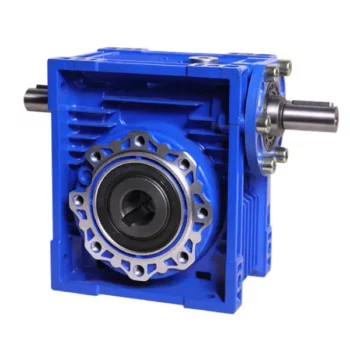
Can a Worm Gearbox be Used for High-Speed Applications?
Worm gearboxes are generally not recommended for high-speed applications due to their inherent design characteristics. Here’s why:
- Efficiency: Worm gearboxes tend to have lower efficiency compared to other gearbox types, which means they can generate more heat and experience more energy loss at high speeds.
- Heat Generation: The sliding contact between the worm and worm wheel in a worm gearbox can lead to significant friction and heat generation, especially at high speeds. This heat can cause thermal expansion, affecting the gearbox’s performance and longevity.
- Wear and Noise: High speeds can exacerbate wear and noise issues in worm gearboxes. Increased friction and wear can lead to faster degradation of components, resulting in reduced lifespan and increased maintenance needs.
- Backlash: Worm gearboxes may have higher backlash compared to other gearbox types, which can impact precision and accuracy in high-speed applications.
While worm gearboxes are more commonly used in applications requiring high torque and moderate speeds, they may not be the best choice for high-speed scenarios. If high-speed operation is a requirement, other gearbox types such as helical, spur, or planetary gearboxes are often better suited due to their higher efficiency, lower heat generation, and reduced wear at elevated speeds.
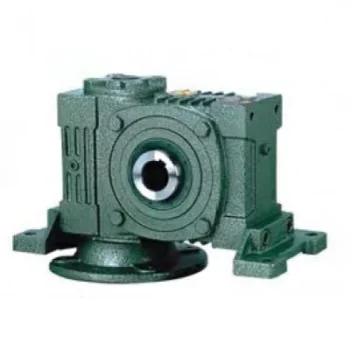
Diagnosing and Fixing Oil Leakage in a Worm Gearbox
Oil leakage in a worm gearbox can lead to reduced lubrication, increased friction, and potential damage to the gearbox components. Here’s a step-by-step process to diagnose and fix oil leakage:
- Inspect the Gearbox: Perform a visual inspection of the gearbox to identify the source of the leakage. Check for oil stains, wet spots, or oil pooling around the gearbox.
- Check Seals and Gaskets: Inspect the seals, gaskets, and O-rings for any signs of wear, cracks, or damage. These components are common points of leakage.
- Tighten Bolts and Fasteners: Ensure that all bolts, screws, and fasteners are properly tightened. Loose fasteners can create gaps that allow oil to escape.
- Replace Damaged Seals: If you find damaged seals or gaskets, replace them with new ones. Use seals that are compatible with the operating conditions and lubricant.
- Check Breather Vent: A clogged or malfunctioning breather vent can cause pressure buildup inside the gearbox, leading to leakage. Clean or replace the breather vent if necessary.
- Examine Shaft Seals: Check the shaft seals for wear or damage. If they’re worn out, replace them with seals of the appropriate size and material.
- Use Proper Lubricant: Ensure that you’re using the correct lubricant recommended for the gearbox. Using the wrong type of lubricant can cause leaks.
- Apply Sealants: In some cases, applying a suitable sealant to the joints and connections can help prevent leaks. Follow the manufacturer’s instructions for proper application.
- Monitor Leakage: After addressing the issues, monitor the gearbox for any signs of continued leakage. If leakage persists, further investigation may be required.
- Regular Maintenance: Implement a regular maintenance schedule that includes checking seals, gaskets, and other potential leakage points. Timely maintenance can prevent future leakage issues.
If you’re unsure about diagnosing or fixing oil leakage in a worm gearbox, consider consulting with a professional or gearbox manufacturer to ensure proper resolution.
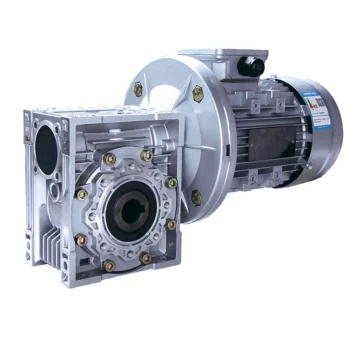
Preventing Backlash in a Worm Gearbox
Backlash in a worm gearbox can lead to reduced accuracy, positioning errors, and decreased overall efficiency. Here are steps to prevent or minimize backlash:
- High-Quality Components: Use high-quality worm gears and worm wheels with tight manufacturing tolerances. Precision components will help reduce backlash.
- Proper Meshing: Ensure the worm gear and worm wheel are properly aligned and meshed. Improper meshing can lead to increased backlash.
- Preload: Applying a small amount of preload to the worm gear can help reduce backlash. However, excessive preload can increase friction and wear.
- Anti-Backlash Mechanisms: Consider using anti-backlash mechanisms, such as spring-loaded systems or adjustable shims, to compensate for any inherent backlash.
- Lubrication: Proper lubrication can reduce friction and play a role in minimizing backlash. Use a lubricant that provides good film strength and reduces wear.
- Maintenance: Regularly inspect and maintain the gearbox to identify and address any changes in backlash over time.
It’s important to strike a balance between reducing backlash and maintaining smooth operation. Consulting with gearbox experts and following manufacturer guidelines will help you optimize your worm gearbox’s performance while minimizing backlash.


editor by CX 2024-05-10